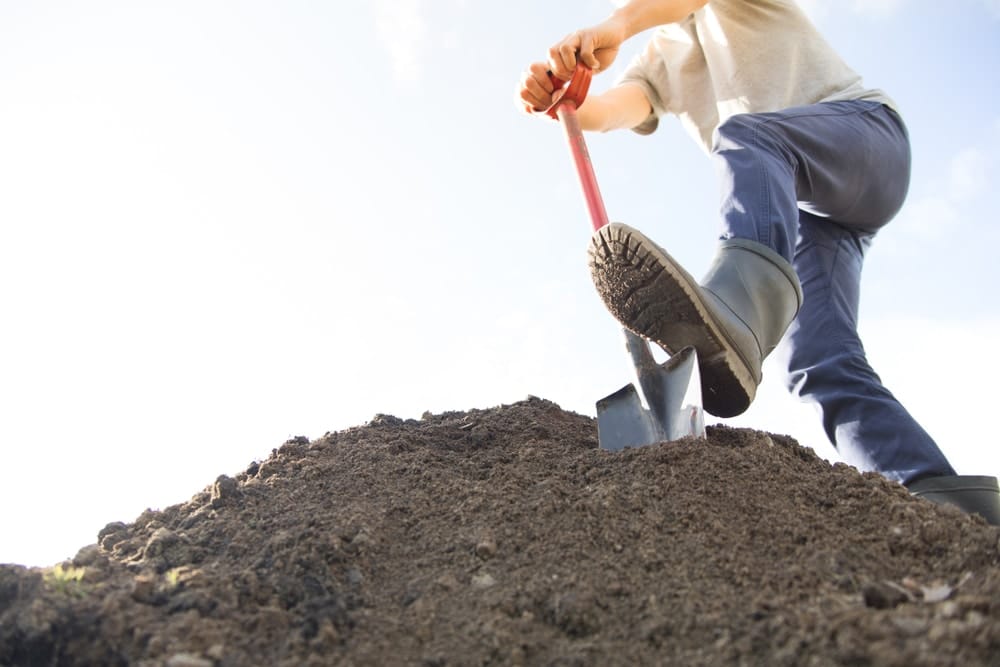
Let’s talk about hand excavation vs. machinery, and why we prefer the option we do. First of all, what exactly is the difference? Hand excavation is exactly what it sounds like– using a hand-held shovel to do some long, tough, sweaty labour. Machine excavation is also quite self-explanatory– it involves the use of heavy equipment that requires skilled operation.
So really, which method is better? Of course there are pros and cons to both, which we’ll break down below:
Hand Excavation
Pros:
- Cost-Effective: Excavating by hand is often far less expensive than renting or operating heavy machinery. There are no fuel costs, no ongoing maintenance, and no upfront equipment fees. For small-scale projects or areas that are difficult to access with machinery, hand excavation can save significant costs.
- High Precision: Hand tools allow workers to excavate with exceptional accuracy. This is particularly useful when working near structural elements, utility lines, or delicate landscaping. Using a shovel or spade in close quarters means the risk of damaging foundations, pipes, or other important structures is minimized. Even if minor damage occurs, it is generally easier and cheaper to repair compared to damage caused by a heavy machine.
- Flexibility in Tight Spaces: For sites with limited access, such as narrow pathways, finished yards, or dense urban areas, hand excavation is often the only practical method. Crews can navigate obstacles that machinery cannot reach.
Cons:
- Labor-Intensive: Hand excavation is physically demanding. Crews may experience fatigue faster, which can lead to slower progress and potential injuries if proper safety precautions are not followed.
- Time-Consuming: Removing soil manually is a slower process. Each scoop of dirt is smaller than a machine-operated bucket, so larger projects may take considerably longer to complete.
- Limited Capacity: Hand excavation is best suited for smaller projects or precision work. For large-scale earthmoving, it can become impractical due to the extended timeline and physical demands.
Machine Excavation
Pros:
- Speed and Efficiency: Machines can move large volumes of soil quickly, drastically reducing project timelines. This makes them ideal for big excavation projects like building foundations, roadworks, or commercial landscaping.
- Reduced Physical Strain: Operating machinery significantly reduces the physical effort required from workers. Instead of back-breaking labor, crews focus on operating and guiding the equipment efficiently.
- Smaller Crew Requirements: A single machine can often replace several workers, lowering labor costs and streamlining operations.
Cons:
- Less Precision: Heavy machinery may not provide the same level of fine control as hand tools. Working near foundations, utility lines, or delicate structures increases the risk of accidental damage.
- Need for Skilled Operators: Machines require trained operators to ensure safe and accurate excavation. Mistakes can lead to costly repairs or project delays.
- Access Limitations: Some sites, especially those with restricted access, narrow pathways, or finished landscaping, may not accommodate large machinery, making hand excavation the only viable option.
Comparing Hand Excavation and Machine Excavation
When deciding between hand and machine excavation, several factors come into play, including project size, budget, precision needs, and safety. Below is a detailed comparison:
| Feature | Hand Excavation | Machine Excavation |
| Speed | Slow; time-consuming | Fast; moves large amounts quickly |
| Precision | High; ideal for delicate work | Medium; less control near structures |
| Cost | Low upfront, higher labor | High upfront, lower labor cost |
| Crew Size | Larger crew needed | Smaller crew needed |
| Safety Risk | Physical strain, fatigue | Operator errors, accidental damage |
| Best Use | Small areas, sensitive zones | Large-scale excavation, open areas |
Choosing the Right Excavation Method
Overall, our team chooses hand excavation when precision and careful handling are required. While machine excavation is faster and less physically demanding, it may not always provide the level of control needed for delicate projects. In many cases, a hybrid approach works best: using machines for bulk soil removal and hand excavation for detailed finishing around structural elements and confined spaces.
Safety Considerations During Excavation
Excavation, whether manual or machine-based, comes with safety risks. Implementing safety measures can prevent accidents and injuries on the site:
- Personal protective equipment (PPE): Hard hats, gloves, steel-toed boots, and high-visibility clothing.
- Proper training: All operators of machinery should have certification and training.
- Clear work zones: Ensure areas are free from debris, underground utilities are marked, and boundaries are clearly defined.
- Regular breaks: Hand excavation crews should take frequent breaks to prevent fatigue-related accidents.
- Equipment maintenance: Machines should be inspected regularly to prevent malfunctions.
Costs Associated with Excavation Methods
Hand Excavation Costs:
- Minimal equipment costs; primarily labor.
- Longer project timeline can increase total labor expenses.
- Lower risk of accidental structural damage, reducing repair costs.
Machine Excavation Costs:
- Equipment rental or purchase can be expensive.
- Fuel and maintenance costs add to the overall project budget.
- Reduced labor requirements can offset higher upfront equipment costs.
- Faster project completion can save money on overall project timelines.
When to Use a Hybrid Approach
A hybrid excavation approach combines the benefits of both methods:
- Machines for bulk removal: Use machinery to remove large volumes of soil quickly.
- Hand work near structures: Switch to hand excavation when digging close to foundations, pipes, or sensitive areas.
- Optimized timeline: Machine work accelerates progress, while hand work ensures precision and quality.
This approach is often ideal for residential construction, landscaping, and basement or trench work, balancing speed and accuracy. Overall, our team chooses to operate with hand excavation for more precision and a higher-quality finish to the work we do for you.