



Basement moisture, soggy yards, and foundation concerns often come down to one culprit: poor drainage. If water is pooling where it shouldn’t, you may have heard of a French drain as a potential solution. But how does a French drain work? And is it right for your property?
This guide breaks it all down—what a French drain is, how it functions, and why it’s become one of the most effective drainage systems used in Canadian homes today. Whether you’re battling surface water or groundwater intrusion, French drains are worth a closer look.
What Is a French Drain?
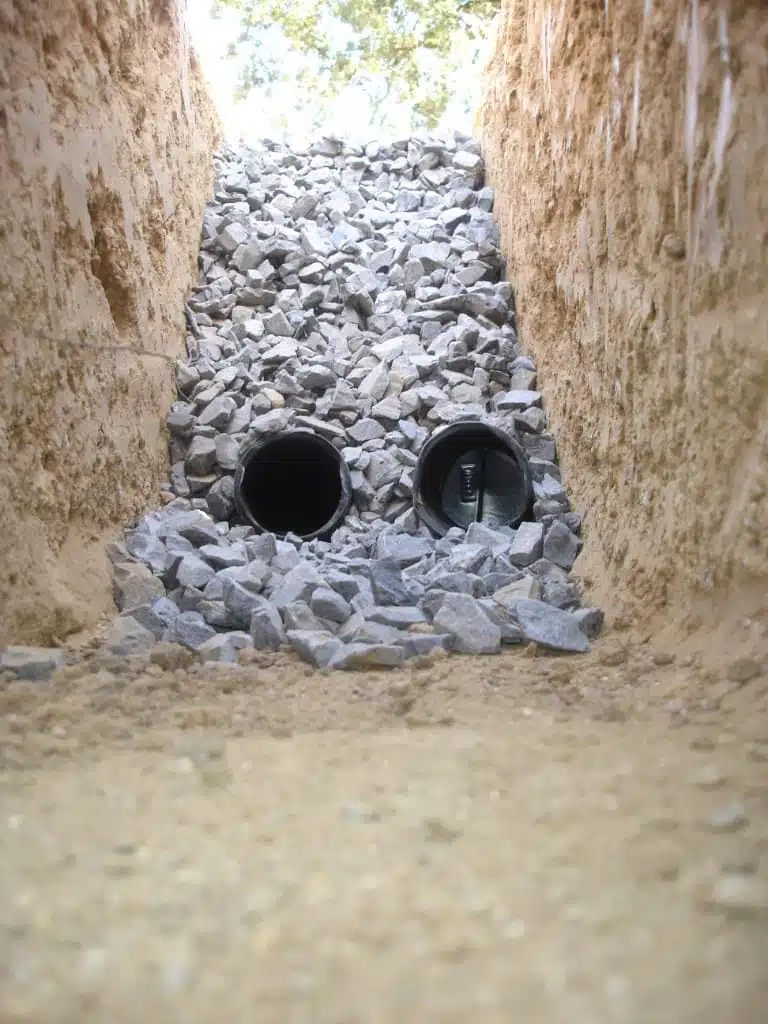
A French drain is a gravel-filled trench with a perforated pipe at the bottom that redirects water away from your property. Its goal is simple: prevent water from damaging your home’s foundation or landscaping by guiding it to a safer discharge point.
Named after Henry Flagg French—not the country—this system relies on gravity. Once installed, water naturally flows through the gravel, enters the pipe, and is carried away from trouble areas like basements, crawlspaces, and patios.
But not all French drains are the same. Depending on your drainage problem, you may need either an exterior or interior French drain.
What Are the Main Parts of a French Drain?
A French drain depends on several parts working together:
- Perforated pipe: Collects water and carries it toward the outlet.
- Washed stone or gravel: Creates open spaces that let water move more freely than it would through compacted soil.
- Geotextile fabric: Helps keep soil and fine sediment from filling the stone bed or clogging the pipe.
- Sloped trench: Provides a continuous route for water to move toward a lower discharge point.
- Safe outlet: Releases the collected water into a suitable location, such as a dry well, swale, approved drainage connection, or sump system.
The outlet and slope are just as important as the pipe. A well-built trench will still perform poorly if the collected water has nowhere suitable to go.
Exterior French Drains: Protecting the Perimeter
Exterior French drains are typically installed around the perimeter of your home—either at ground level or along the foundation footing. They’re particularly effective in managing surface water and subsurface groundwater that flows toward the foundation during heavy rainfall or spring thaw.
Here’s how it works:
- A trench is dug around the home’s perimeter.
- A perforated pipe is laid at the trench’s bottom, surrounded by gravel and landscape fabric.
- As water seeps into the ground, it flows through the gravel and into the pipe.
- The pipe redirects water away from the structure—often to a sump pit, storm drain, or swale.
Exterior French drains are usually installed during new construction or major landscaping projects. Though more invasive, they offer excellent long-term protection for foundations prone to water pressure and hydrostatic buildup.
Interior French Drains: Basement Waterproofing from Within
Interior French drains serve the same purpose—directing water away—but they’re installed inside your home, typically along the interior perimeter of your basement.
Here’s what to expect:
- A small channel is cut along the basement floor, near the foundation walls.
- A perforated pipe is placed in the trench, which then connects to a sump pump.
- The trench is filled with gravel and topped with concrete.
- When groundwater builds up beneath the slab or leaks through wall cracks, the system collects it and sends it to the sump pump for removal. Since sump pumps are essential for this system to work, it’s a good idea to make sure yours is in top shape. Here’s a helpful guide on how to test if your sump pump is working properly.
Interior French drains are ideal for finished basements or when exterior excavation isn’t practical. They’re often used alongside waterproof membranes or sealants to give homeowners added peace of mind.
Interior vs. Exterior French Drains at a Glance
| Feature | Exterior Drain | Interior Drain |
|---|---|---|
| Installation location | In the yard or outside the foundation | Beneath the basement floor near the perimeter |
| Main purpose | Intercepts water before it reaches the interior | Collects water entering at the wall-floor joint or beneath the slab |
| Typical outlet | Dry well, swale, approved drainage point, or sump system | Sump pit and discharge pipe |
| Main disruption | Excavation and possible landscaping removal | Concrete floor cutting and possible removal of finished materials |
| Often considered when | Water collects outside, soil stays saturated, or foundation walls need exterior work | Exterior access is limited or water rises beneath the basement slab |
Neither system is automatically better. The correct choice depends on where the water originates and how it is entering the property.
Expert Tip
Start by identifying the source of the water rather than choosing a system based only on cost or convenience. Surface runoff, wall seepage, water rising beneath the slab, plumbing leaks, and sewer backups require different solutions.
How Does a French Drain Work?
So, how does a French drain work exactly? Whether installed inside or out, the principle remains the same: it uses gravity and porous materials to reroute water. Here’s a step-by-step breakdown:
- Water collects in the soil—either from rain, snowmelt, or rising groundwater.
- Gravel filters the water and allows it to pass easily without clogging the system.
- The perforated pipe collects water and carries it away from your foundation.
- Water is discharged at a safe distance, typically into a storm drain, dry well, or sump basin.
By lowering the water table around your home, a French drain helps prevent:
- Foundation cracks
- Basement leaks
- Mould growth
- Soil erosion around footings
Benefits of a French Drain System
Improved Foundation Protection
By keeping water away from your home’s base, you lower the risk of cracks, shifting, and long-term structural damage.
Reduced Basement Flooding
Homes in areas with high water tables or frequent thaw-freeze cycles benefit from the consistent water redirection.
Low Maintenance
Once installed properly, a French drain requires little upkeep, especially if protected by filter fabric and gravel.
Invisible Solution
Once covered with soil or turf, the system blends seamlessly with your landscaping.
When Is a French Drain the Right Solution?
A French drain may be appropriate when:
- Water repeatedly pools in a low part of the yard.
- Soil beside the foundation remains saturated after rainfall or snowmelt.
- Groundwater moves toward the house from a higher part of the property.
- Water enters near the basement wall-floor joint.
- Hydrostatic pressure pushes water through or beneath the basement slab.
- Water collects behind a retaining wall.
- A safe and practical discharge route is available.
When a French Drain May Not Solve the Problem
A French drain is not the correct repair for every wet basement or drainage concern. Another solution may be needed when:
- Water is coming from a plumbing leak or damaged water line.
- Wastewater is backing up through a basement floor drain.
- A single foundation crack is the main entry point.
- Blocked eavestroughs or short downspouts are releasing roof water beside the foundation.
- The soil slopes toward the house and can first be corrected through grading.
- The proposed drain has no reliable downhill outlet or sump system.
- Structural foundation movement is contributing to the water entry.
A drainage assessment should identify where the water originates, how it travels across or beneath the property, and where it can be discharged before a system is selected.
French Drain Installation: DIY or Professional?
While installing a French drain might sound like a straightforward weekend project, there’s more to it than digging a trench. Factors like slope, pipe direction, backfill, and proximity to utilities can make or break your drainage solution.
In many Canadian municipalities, permits may be required—particularly if the discharge connects to city storm sewers. A professional contractor ensures that your system is up to code and functioning properly. They’ll also be able to assess if other drainage upgrades (e.g., sump pumps, grading correction) are needed.
Final Thoughts
So, how does a French drain work? By using gravity, gravel, and smart design, it quietly protects your home from costly water damage. Whether you choose an interior French drain for your basement or an exterior solution for your yard, this time-tested system remains one of the most practical and effective drainage options available to Canadian homeowners.